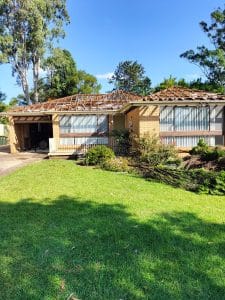
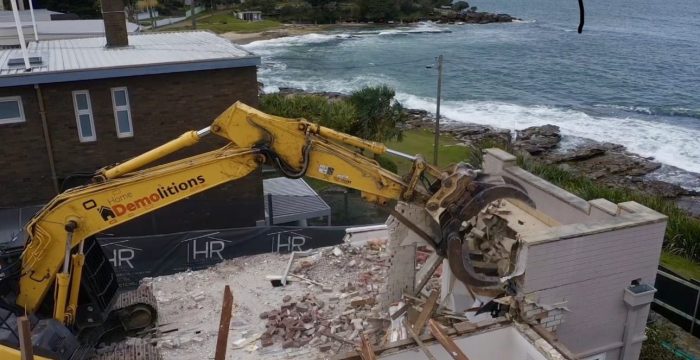
Demolishing a house is a big job. Whether you’re clearing space for a new build or removing an unsafe structure, knowing what’s involved makes the process far more manageable. At Home Demolitions, we’ve guided hundreds of homeowners through residential demolition projects across Sydney and beyond. Here’s a detailed breakdown of what to expect at each stage.
1. Site Inspection and Consultation
Every successful demolition begins with a detailed site assessment. Our team visits your property to evaluate the structure and surrounding environment. We look for key details like access, existing materials, slope, and whether any parts of the home can be salvaged or recycled.
We also discuss your goals, timeline, and any concerns you may have. This helps us build a tailored plan that fits your budget and schedule.
→ Learn more about our residential demolition services
2. Permit Applications and Council Approvals
Before any demolition work can begin, you’ll need approval from your local council. This usually comes in the form of a Development Application (DA) or a Complying Development Certificate (CDC). These approvals confirm that your project meets zoning, safety, and environmental standards.
Our team can help prepare the necessary documentation and lodge applications on your behalf, so you don’t have to worry about chasing paperwork.
→ For guidance, visit our FAQ page
3. Utility Disconnections
For safety reasons, all utility services must be disconnected before demolition begins. This includes power, gas, water, sewerage, and any telecommunications. We coordinate with service providers to ensure everything is shut off properly and in line with regulations.
It’s important to note that failing to disconnect utilities can delay your project and cause serious hazards on-site. Our experienced project managers make sure nothing is overlooked.
4. Hazardous Material Checks and Removal
Many older Australian homes were built using materials now considered dangerous, such as asbestos or lead-based paint. These need to be identified and safely removed by licensed professionals before demolition begins.
We’ll inspect your home for any hazardous materials during the site assessment. If anything is found, we’ll arrange for compliant removal through certified specialists. Our top priority is protecting your health and the environment.
5. Salvaging and Strip-Out
Before we bring in the machines, we remove any items that can be reused, recycled, or resold. This includes timber, kitchen cabinetry, metal fixtures, and sometimes even roofing materials. By stripping out reusable elements, we reduce the amount of waste that ends up in landfill.
You may also benefit financially. Through our Salvage Subsidies and Recycling Program, we help recover value from your materials and offset some of your demolition costs.
6. Sediment Control and Safety Setup
Before demolition starts, we set up erosion and sediment control measures. These help prevent soil or waste from contaminating stormwater systems and surrounding properties. It’s not only good environmental practice—it’s also required by law in many council areas.
We also install barriers and signage around the site to keep it safe and secure.
→ Learn why this is essential on our sediment control page
7. Demolition Execution
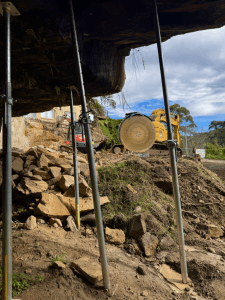
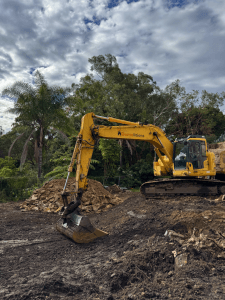
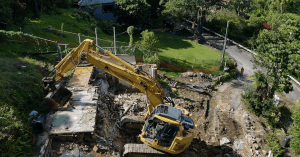
Now the real work begins. Depending on the site and structure, demolition may be carried out using excavators or other machinery. We follow an efficient and careful process to bring the house down while controlling dust and debris.
Our team is trained in both mechanical and manual demolition techniques. In some cases, we use a combination of both, especially in tight access areas or where nearby properties require extra care.
8. Waste Removal and Recycling
Once the house is down, the next step is sorting and removing the debris. At Home Demolitions, we prioritise recycling wherever possible. Concrete and bricks are crushed for reuse, timber is salvaged, and metals are sent to local recyclers.
This not only reduces the environmental footprint of the project but also helps cut down on disposal costs.
→ Explore our eco-friendly demolition practices
9. Site Cleanup and Final Handover
After the debris is cleared, we level and clean the site. This leaves you with a blank canvas, ready for your next stage—whether it’s building a new home or preparing to sell the land.
We perform a final inspection to make sure the job meets your expectations and complies with council requirements. If requested, we can also assist with ongoing site preparation services for your rebuild.
Final Thoughts
A residential demolition project involves more than just knocking down a building. From permits and planning to recycling and cleanup, there are many moving parts. That’s why it helps to work with an experienced and professional team.
At Home Demolitions, we guide you through every step of the process. We make sure your project runs smoothly, stays compliant, and delivers great results—without unnecessary stress.
Ready to clear the way for your next chapter?
📞 Call us on 1300 045 355
📧 Get in touch today